
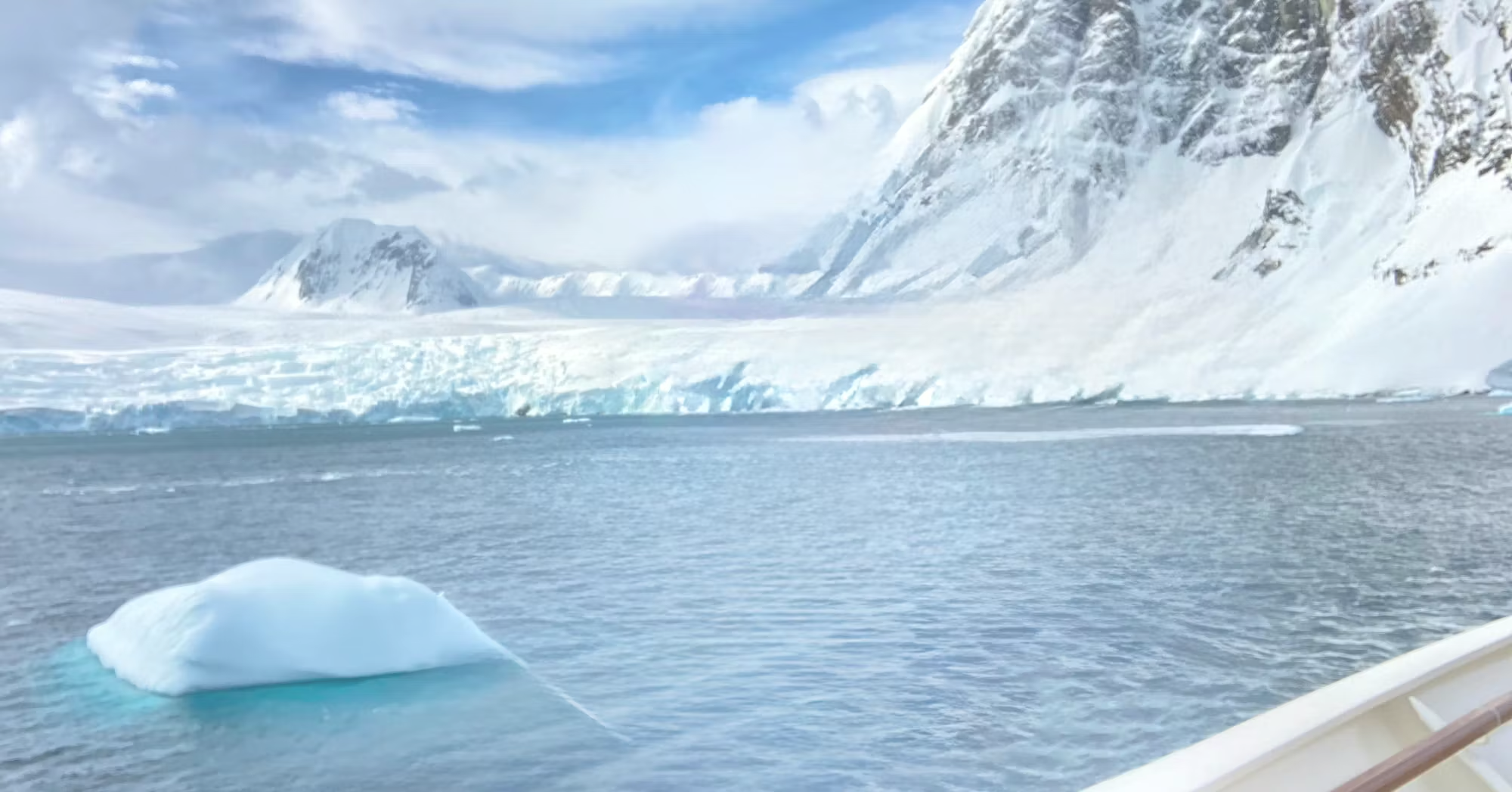

Our August Featured Offers
At Swoop we proudly work with every operator in the Antarctic industry.
This means we can find you the latest deals and with our Price Match Promise you know you're getting the very best price.


On our first landing in Antarctica, dozens of penguins skimmed playfully in the water around our zodiac like an honour guard as we headed towards the shore. What better way to arrive for our first footsteps on the Seventh Continent?
Heather Moult Antarctica Specialist
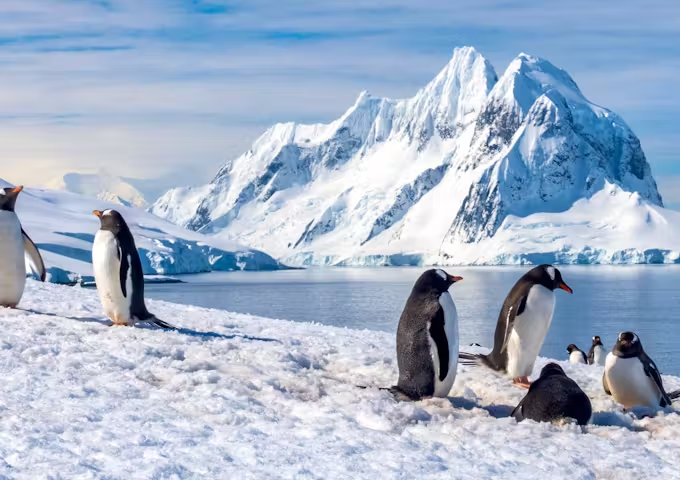
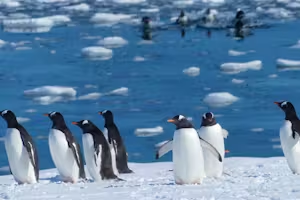
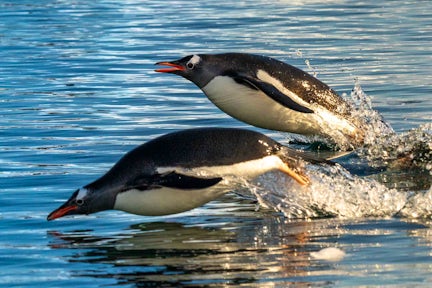
Gentoo penguins on the Antarctic Peninsula
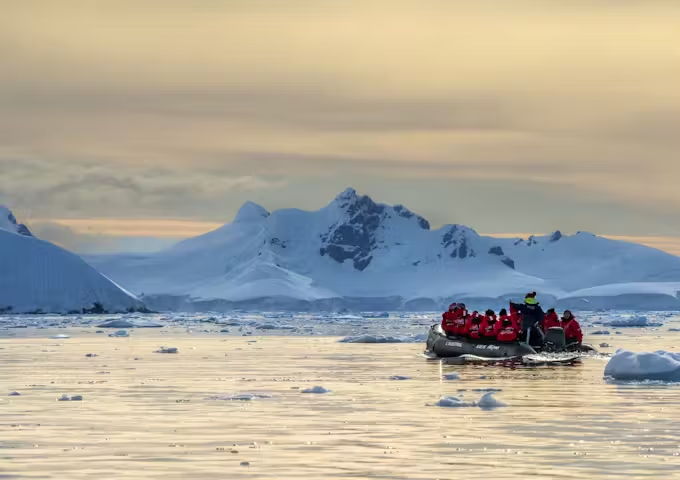
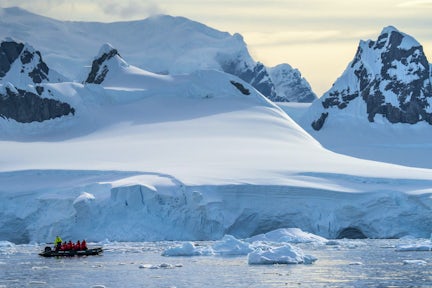
Zodiac cruising during a late season sunrise
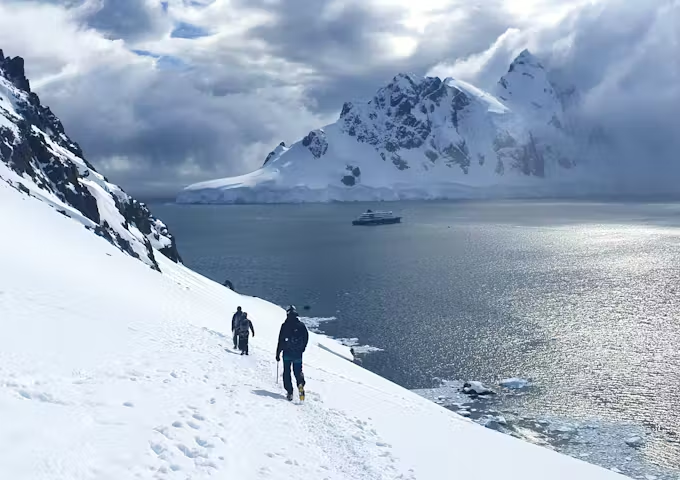
Mountaineering on the Antarctic Peninsula
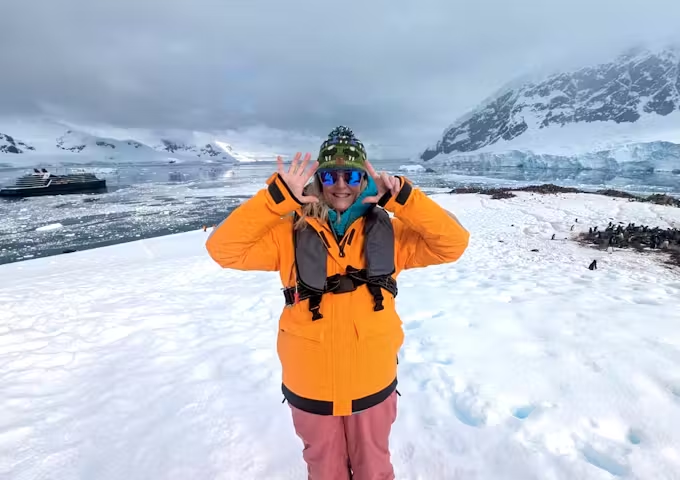
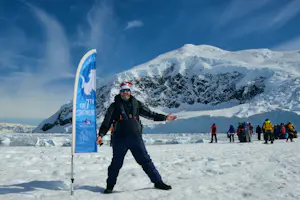
Stepping foot on the 7th Continent
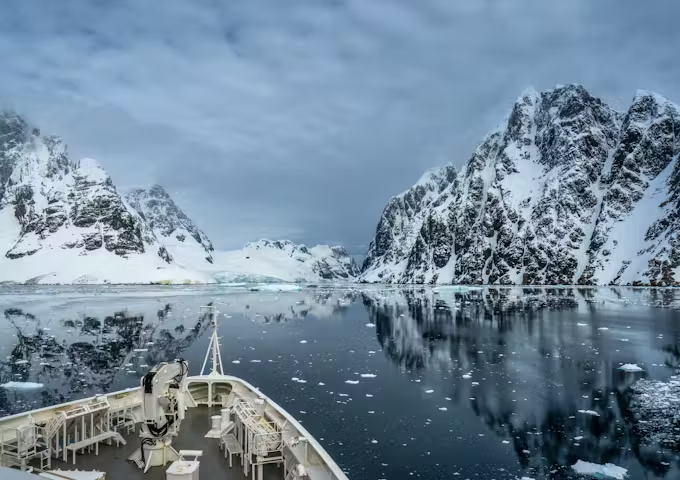
Cruising through the Lemaire Channel
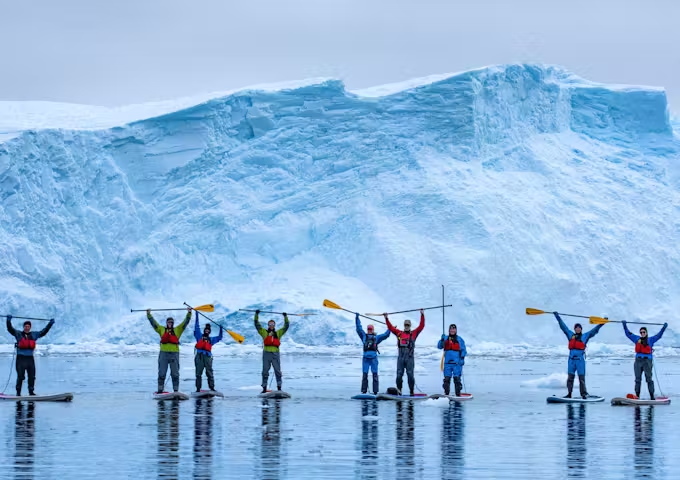
Stand-Up Paddleboarding on the Antarctic Peninsula
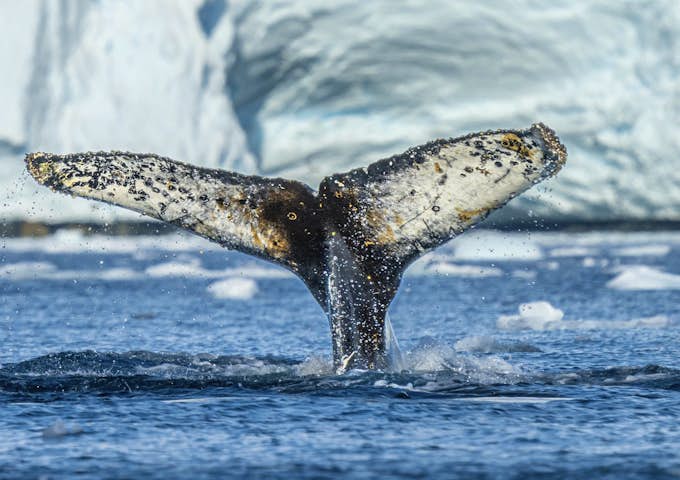
A humpback whale shows its flukes

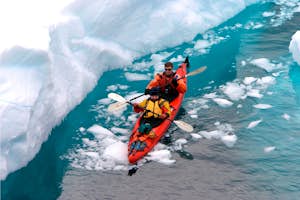
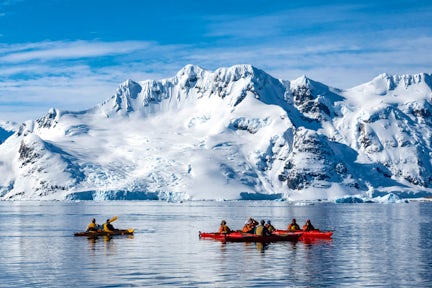
Kayaking on the Antarctic Peninsula
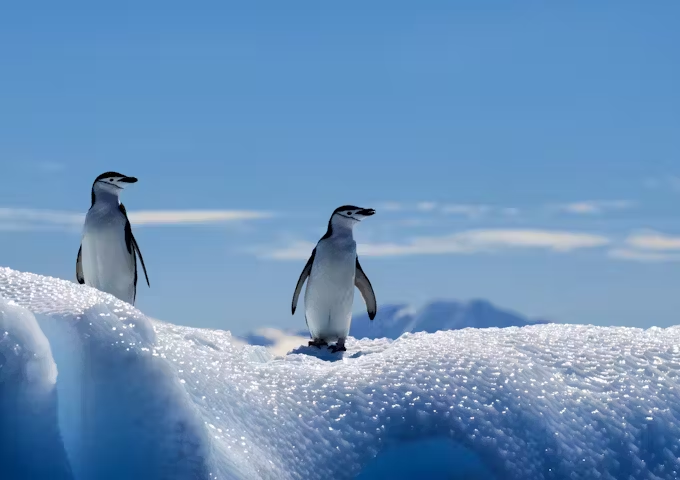
Chinstrap penguins on an icefloe

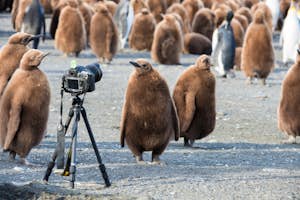
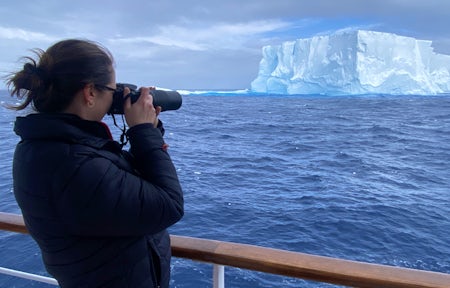
Photography on the Southern Ocean
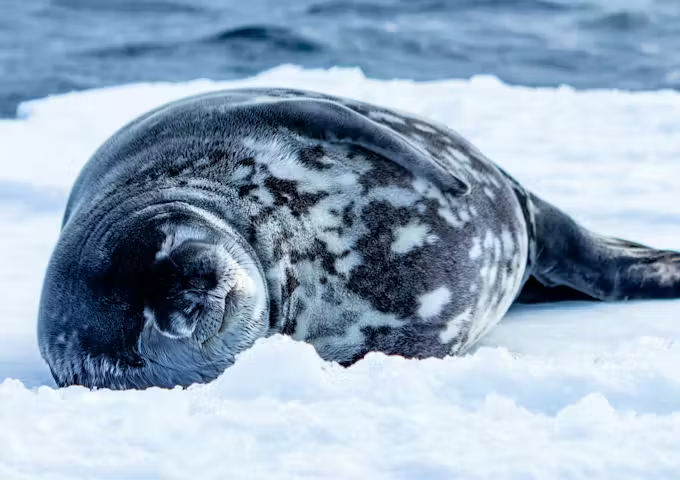
Weddell seal on the ice
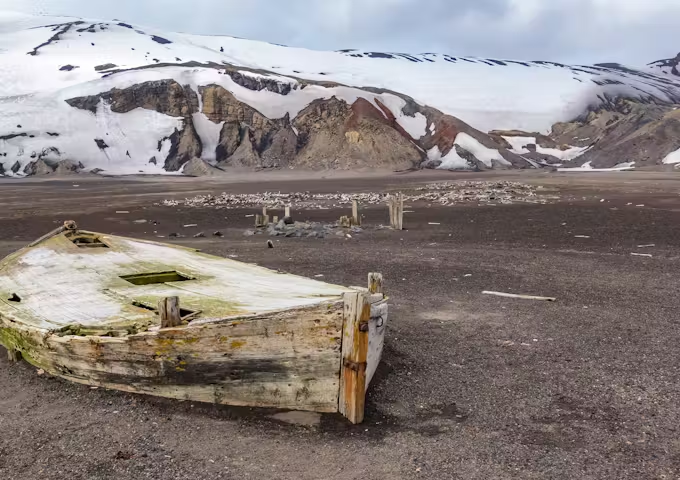
Abandoned whale boat on Deception Island
Price Match Promise - We’ll match any price you find elsewhere for the same trip
At Swoop we proudly work with every operator in the Antarctic industry.
This means we can find you the latest deals and with our Price Match Promise you know you're getting the very best price.
Whether you want to embrace the wilds of Southern Patagonia
or unwind at a vineyard near Santiago,
talk to Swoop about extending your adventure...

Antarctic Peninsula Cruises trips scored 4.4/5 from 935 reviews
Swoop are very good and John's advice and chats that we had, made what could have been a difficult decision easy.
Travelled: March 2018
Mick - UK
I could not have asked for better service than Swoop provided. You answered all my questions and concerns and provided me with all trip details and requirements.
Travelled: January 2018
Al & Natalia - Florida
Excursions were the highlights of the trip. I can't point a finger to any of them saying that one was the best. They were all fantastic!
Travelled: January 2018
Zoltan & Stephen Nemeth - Florida
It was an incredible experience. Antarctica is unlike any place I have ever visited, totally unspoiled by human influence aside from the few research stations dotted here and there. The raw beauty and remoteness is impossible to describe.
Travelled: January 2018
Tony & Penny - Mississippi
We saw much more wildlife than expected, including humpbacks swimming around and under our kayaks, as well as visiting the boat on several occasions; an unusual visit from a large pod of orcas; lots of seals; birds and, of course, highly entertaining penguins.
Travelled: December 2017
George & Kate - Connecticut
We booked with Swoop because it was evident in the first phone call that Swoop knew far more about Antarctic travel than an agent recommended by friends. Book through people who have been there repeatedly; Swoop was an excellent choice.
Travelled: December 2017
Marc - Florida
Lemaire Channel was spectacular even though we had to turn around at the end due to iceberg blocking the way. Saw so many whales - fin, humpback, and orca.
Travelled: March 2017
Nathalie - California
Seeing astounding small blue crevasses among the vast white background, watching sea-ice form, witnessing icebergs calving and crashing into the sea, unexpectedly coming across lush green algae and blue copper staining on the rocks are all experiences that we will never forget.
Travelled: March 2017
Graham and Angela - UK
My highlight was landing on the continent in Paradise Bay and going to Deception Island. We repeatedly said we felt like we were on an ocean safari, we saw so much wildlife every day.
Travelled: March 2017
Barbara - California
If there’s one thing that everyone wants to see on an Antarctic trip, it’s a penguin – and the Antarctic Peninsula has them in absolute abundance. There are three main species: gentoos, chinstraps and Adelie penguins. You’ll find them perched on ice floes or coming and going from thousands-strong rookeries, incubating eggs or raising fluffy chicks. However charming you think penguins are, they’re even more so in their natural habitat.
There areseals aplenty, from sinuous leopard seals to gigantic elephant seals, though even those are dwarfed by the true kings of the polar seas: the whales. The Antarctic Peninsula is one of the world’s best whale watching destinations, offering the opportunity to encounter humpback whales, orcas – and perhaps even the largest animal on the planet, the blue whale.
The Antarctic Peninsula in essence is one long mountain range that bursts dramatically out of the Southern Ocean, resulting in a landscape of almost endless beauty and fascination.
There are hundreds of potential landing sites and zodiac cruising spots along the Peninsula, each seemingly more gorgeous than the last. There are snowy peaks as jagged as if a child drew them, crinkly fjords and pocket-sized bays that serve as graveyards for exquisitely carved icebergs.
The unpredictable polar weather means that you can never guarantee where you might visit on any day – the anticipation is part of the excitement of expedition cruising – but whether you're cruising through glassy straits strewn with ice or exploring frozen shores dotted with penguin rookeries, the Peninsula always offers something extraordinary to see.
Camping in Antarctic was the most magical experience. I dug my snow hole and lay awake for hours listening to cracking ice and the calls of distant penguins. It made me feel like I was the only person on the planet.
Maddison Clare Antarctica Specialist
You needn’t be a passive observer when it comes to visiting the Antarctic Peninsula: expedition cruise ships have a host of optional adventure activities to allow you to experience the White Continent with a taste of adrenaline.
One of the best ways to get up close and personal to Antarctica is by kayaking, silently paddling through brash ice while penguins porpoise around you. If you really want to swim like them, you might try snorkelling or even scuba diving – though you’ll never match their easy grace.
On land, you can get to grips with the snow and ice by snowshoeing or mountaineering. One of the most magical experiences is overnight camping: tucked into a snow hole you dug yourself and falling asleep in a great white silence punctuated only by the distant sound of crashing glaciers.
Explorers, adventurers and scientists have been travelling to the Antarctic Peninsula for over 200 years and have left behind many traces of those early pioneering days to discover.
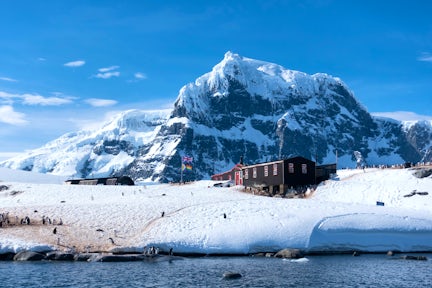
From locations like Deception Island and Port Lockroy and Brown Bluff to Foyn Harbour, you can visit the remains of long-abandoned explorer’s huts, research bases, shipwrecks and even the rusting ruins of old whaling stations.
Every location you sail past has a name associated with the days of the ‘Heroic Age’ of Antarctic exploration or the more recent era of pioneering polar scientists. All expedition cruise ships have their own expert historian guide who is adept at bringing Antarctica's stories to life as you explore this storied landscape.
Swoop has catered for travellers of every group size. Whether you’re adventuring solo or bringing a group of over 100. We can help.
The majority of visitors to the Antarctic Peninsula travel by sea, sailing from Argentina’s southernmost port of Ushuaia and making the two day crossing the Drake Passage.
Crossing the Drake Passage is a key part of the Antarctic experience for many travellers. You’re not alone while you cross either: Albatrosses and other seabirds are your constant companions, soaring with hypnotic ease over the waves and guiding your ship ever further south.
The Drake Passage has something of a fearful reputation for its rough seas, though in truth you’re actually far more likely to encounter the smooth seas of a Drake Lake than the livelier Drake Shake. For those who prefer to avoid it however, it's possible to skip the voyage altogether and fly direct to Antarctica.
There’s an almost bewildering amount of choice available when picking your Antarctic Peninsula cruise, from the different ships and cabin types to the itinerary and departure dates. Swoop’s deep experience as a specialised Antarctic agent can help guide through this maze.
We have over 100 years of collective polar experience with more than 150 visits to Antarctica. That number grows every year: we’re the only polar travel agency that sends every member of its sales team out to Antarctica every year, ensuring that we know every ship in the polar fleet inside and out (a knowledge base we keep topped up with further ship inspections during the off season).
We’ll put this expertise at your service at no extra cost to you, listening to exactly what you want from this once-in-a-lifetime trip, to find the perfect ship and itinerary at the right price for you.
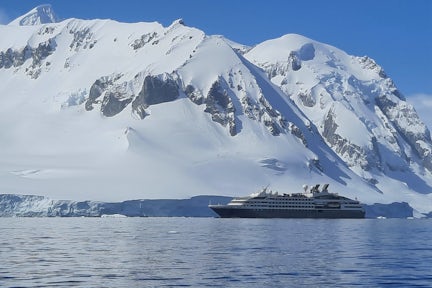
Ships can fill up faster than you think. We strongly recommend starting to plan your trip at least 12 months before you intend to travel to be sure of your preferred dates and ship – particularly if you're travelling at peak dates such as Christmas and school holidays.
If you want to skip the voyage across the Drake Passage, or just want to get to Antarctica in the quickest way possible, fly-sail cruises are an excellent option.
Fly-sail cruises depart from Punta Arenas in Chile, flying in just two hours direct to King Georgia Island in the South Shetland Islands, which lie off the northern tip of the Antarctic Peninsula. On arrival, you transfer directly to your expedition cruise ship to allow you to start exploring Antarctica almost immediately.
Flying to Antarctica is both a comfortable and expedient choice for time-poor and/or anxious sailors, however planes are more susceptible to weather delays than ships, so you’ll need to be ready for flexibility if choosing this option.

The visiting season for the Antarctic Peninsula runs from November through to March. This coincides with the austral summer, as the winter sea ice melts and the coastline becomes accessible to cruise ships. High summer in the middle of December brings nearly 24 hours of daylight.
Within this period, there are variations in how you’ll experience Antarctica. November has the most pristine snow and penguins coming ashore to mate. Penguin chicks typically arrive in Christmas – the peak season for visitors. From the new year onwards, whales are in their greatest abundance, and as the days shorten, chicks get ready to fledge and take to the sea. The shoulder season at the very beginning and end of summer are particularly great for photographers, with amazing sunsets and sunrises.
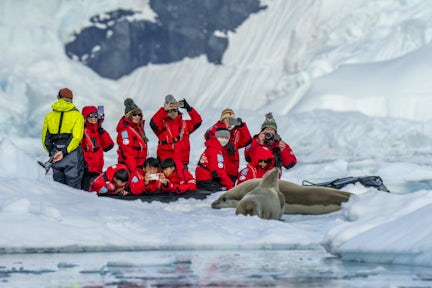
The Antarctic gateway cities of Ushuaia and Punta Arenas are also springboards to Patagonia, and the dramatic landscapes of Torres del Paine and Los Glaciares National Parks. These can be easily explored with Swoop's unique collection of escorted small group tours, with carefully tailored itineraries showcasing the best of this incredible destination.
Every departure is guaranteed, with a maximum of 16 guests. You'll be accompanied by an English-speaking Tour Leader, who'll share their knowledge and passion for their Patagonian home while looking after all the travel arrangements.
Whether you want an active adventure hiking the W Trek, or just want to travel in relaxed comfort, our groups tours offer you the chance to experience Patagonia up close and to make lasting connections with both the region and your fellow travellers.

The ultimate shortcut to Antarctica, bypass the Drake Passage and touch down in Antarctica in just two hours. Less sailing, more icebergs.
Price Match Promise - We’ll match any price you find elsewhere for the same trip
Opulent adventuring awaits. Return from a day's exploring to your luxury cabin, private balcony and 5* gourmet meals. The highest levels of service and quality of ship anywhere in Antarctica.
Price Match Promise - We’ll match any price you find elsewhere for the same trip
The majority of cruises to the Antarctic Peninsula set sail from the Argentinian city of Ushuaia. There are no international flights to Ushuaia, but there are multiple flights every day to the city from Buenos Aires (3½ hours flying time).
After a night in Ushuaia you embark your Antarctic ship and sail through the sheltered waters of the Beagle Channel to make the voyage to Antarctica across the Drake Passage. This takes takes around two days, subject to weather conditions. As you get closer to Antarctica, keep your eyes out for your first iceberg sighting.
Most cruises sail via the South Shetland Islands, which are part of Antarctica but lie 75 miles (120 km) west of the Peninsula. This is also where the landing strip is on King George Island for those flying direct from Punta Arenas.
Antarctic Peninsula cruises are are typically 10 to 12 days in duration, giving you four days exploring Antarctica exploring. Fly & cruise itineraries are typically shorter, as the get to the Peninsula far quicker.
Some itineraries include a night's hotel accommodation in
Ushuaia prior to embarkation. Some luxury itineraries also include a night in Buenos Aires (or Santiago for fly & cruise trips) plus a charter flight down to join your vessel.
A classic Antarctic Peninsula cruise sailing from Ushuaia typically costs from around $6,000 USD to over $30,000 USD per person based on a twin cabin and depending on the size of ship, category of cabin and comfort level of your ship which you decide upon, and the month in which you travel. If you prefer to fly to Antarctica, you pay a premium for this, with prices from around $11,600 USD per person based on a twin cabin for a similar amount of time in Antarctica.
We recommend booking your Antarctic trip at least 12 months in advance of travel to be confident of securing your first choice of ship, voyage date and cabin.
Limited capacity in the polar fleet means that cabins and ships often become booked far in advance, especially for travel around peak season dates, including Christmas, New Year and school holidays. Although late availability deals can sometimes be had, to guaranteed your preferred ship and travel dates, booking early is always the best option.
Yes.
The expedition team are a crucial part of your Antarctic experience, accompanying you throughout. They not only give talks lectures during your voyage, but also add immense value with information and context during actual landings. They're always on hand to answer any questions and are a mine of information on all related subjects.
Each guide in the expedition team is an expert in their respective field, from biology to geology or history. Many having spent literally years in Antarctica. They report to the Expeditionary Leader, an experienced guide and team leader, who along with the ship's captain is responsible for the whole voyage.
Find out more about what to expect on an Antarctic cruise.
The Antarctic Peninsula has its own climate region which is milder than the rest of Antarctica. Winter temperatures drop to around 14F (-10C) while summer highs, generally in January, see temperatures just above freezing. During the peak of summer, you can expect 20 hours of daylight. Daily conditions can change quickly, from cloud to bright sun and dead calm to biting winds.
Whatever the weather, the expedition team on board your ship will ensure you have the best experience possible – and dressed for all conditions.
Absolutely! If you have time, we strongly recommend adding on time at either the beginning or end of your trip to explore Patagonia. Ushuaia is a gateway to Los Glaciares National Park, while Punta Arenas and Puerto Natales are both very close are gateway to Torres del Paine National Park – two of the most spectacular hiking destinations in the world. We offer a selection of carefully curated and Swoop operated group tours to Patagonia, ranging from active adventure (including hiking the W Trek), to travelling in relaxed comfort.
If you'd like to explore more of Chile, we also have a selection of bolt-on packages in Santiago (including winery tours) and the Atacama Desert. See our page on Extending your adventure for more information, or talk to us about tailor-made packages.
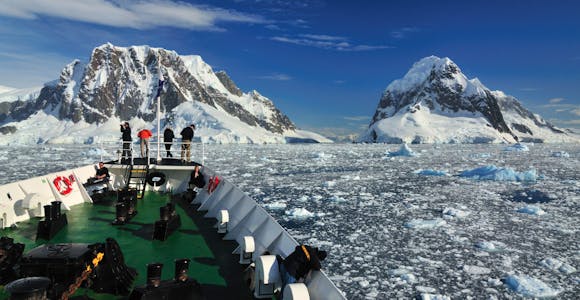
Whether you’re visiting the Antarctic Peninsula or heading for the South Pole, discover the different routes by sea and air to visit the Seventh Continent.
Discover More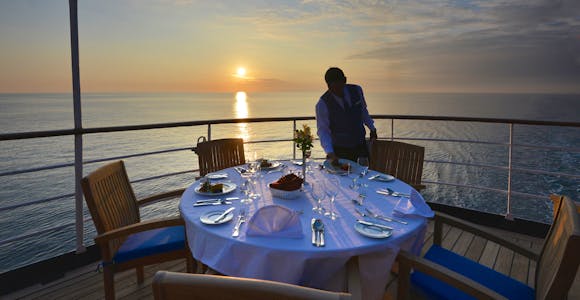
From the onboard service and comfort of the suites to their fantastic expedition teams, luxury Antarctica cruise ships deliver a truly first-class polar experience.
Discover More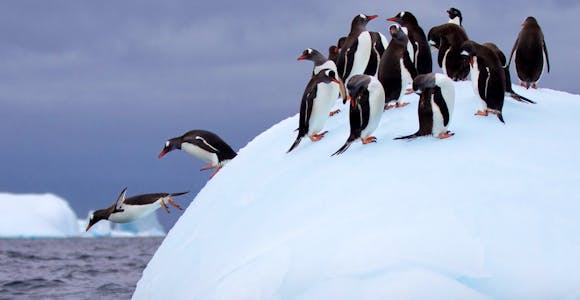
We've teamed up with some of the best cruise operators so that you can choose from over 80 cruise itineraries based on your dates, budget and appetite for adventure.
Discover More
Choosing when to go to Antarctica is a key part of planning a cruise, with each month of the season offering a different side of the continent.
Discover MoreWe'll spend some time listening to your aspirations, then discuss the kind of experience that might suit you.
Next we'll discuss the options, shortlist the best trips for you and present you our impartial recommendations.
We'll place a 24 hour hold on your preferred option - without obligation - whilst we talk through the details.